Surya (Sun)
Traditionally linked to vitality, confidence and recognition. Common upaya: Surya Namaskar, Aditya Hridayam, Surya Homa.
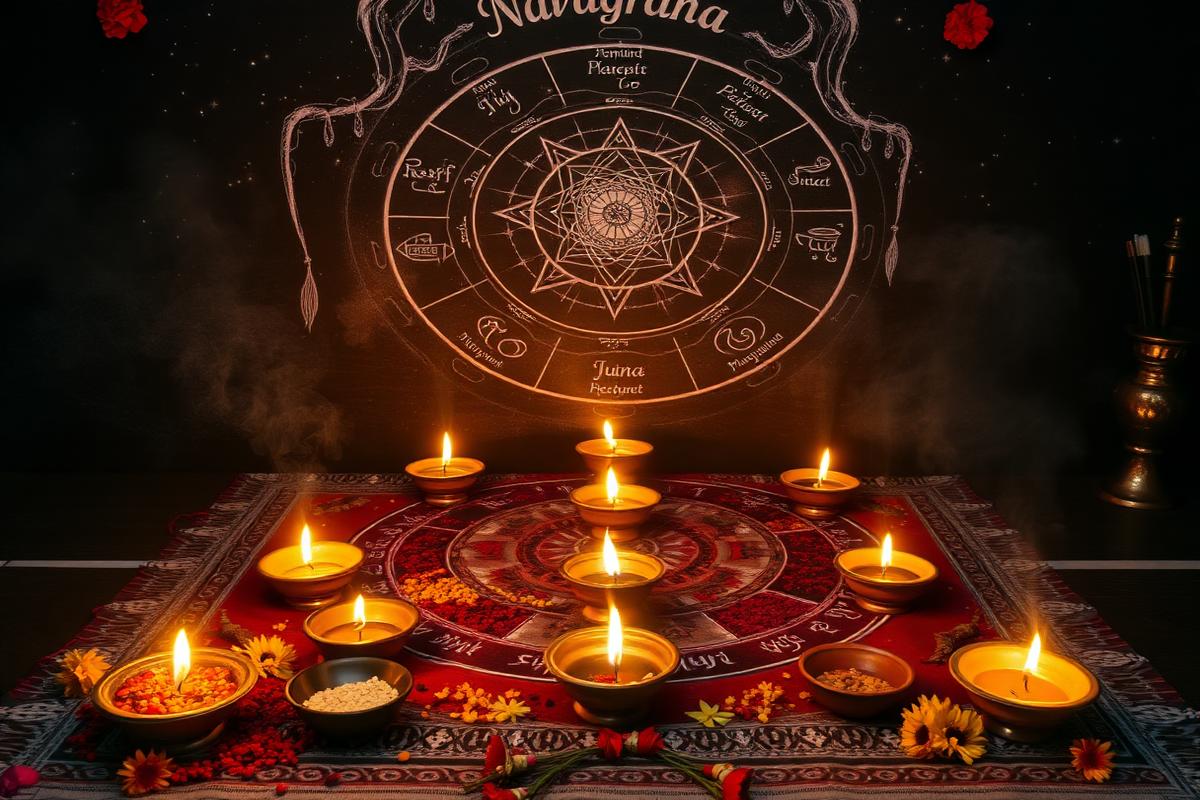
Jyotish — the science of light
Jyotish is not only a diagnosis. For every difficult planetary configuration, tradition offers a remedy: a puja, a homa or a yajna performed in India by pandits, in your name.
Describe my situationThe essentials
Vedic astrology, or Jyotish, is one of the six Vedangas, the auxiliary disciplines of the Vedas. It uses the sidereal zodiac, aligned with the observable position of the constellations rather than the tropical zodiac used in the West — which is why your Vedic sign is often different from the one you know.
The reading is based on the kundali, the birth chart, drawn from date, time and place of birth. The pandit examines the twelve houses (bhavas), the twenty-seven nakshatras (lunar mansions), the nine grahas and above all the dashas, the planetary periods that shape an entire lifetime.
What sets Jyotish apart is that it always proposes a response. That remedy is called the upaya, and it most often takes the form of a Vedic ritual.
Navagraha
Traditionally linked to vitality, confidence and recognition. Common upaya: Surya Namaskar, Aditya Hridayam, Surya Homa.
Connected to the mind, emotions and sleep. Traditional upaya: lunar recitations, Monday Rudrabhishek.
Associated with energy, conflict and the mangal dosha examined in marriage charts. Upaya: Mangal Shanti, Hanuman Chalisa.
Linked to speech, study and trade. Upaya: Vishnu Sahasranama, Budh Shanti Homa.
Associated with wisdom, teaching and family life. Upaya: Guru Shanti, Shri Suktam Havan.
Linked to relationships, art and comfort. Upaya: Lakshmi Puja, Shukra Shanti.
Associated with discipline, sade sati periods and long trials. Upaya: Shani Shanti, Maha Mrityunjaya Yajna.
The lunar nodes, traditionally tied to confusion, sudden obstacles and inner seeking. Upaya: Navagraha Shanti Yajna, Rahu-Ketu Shanti.
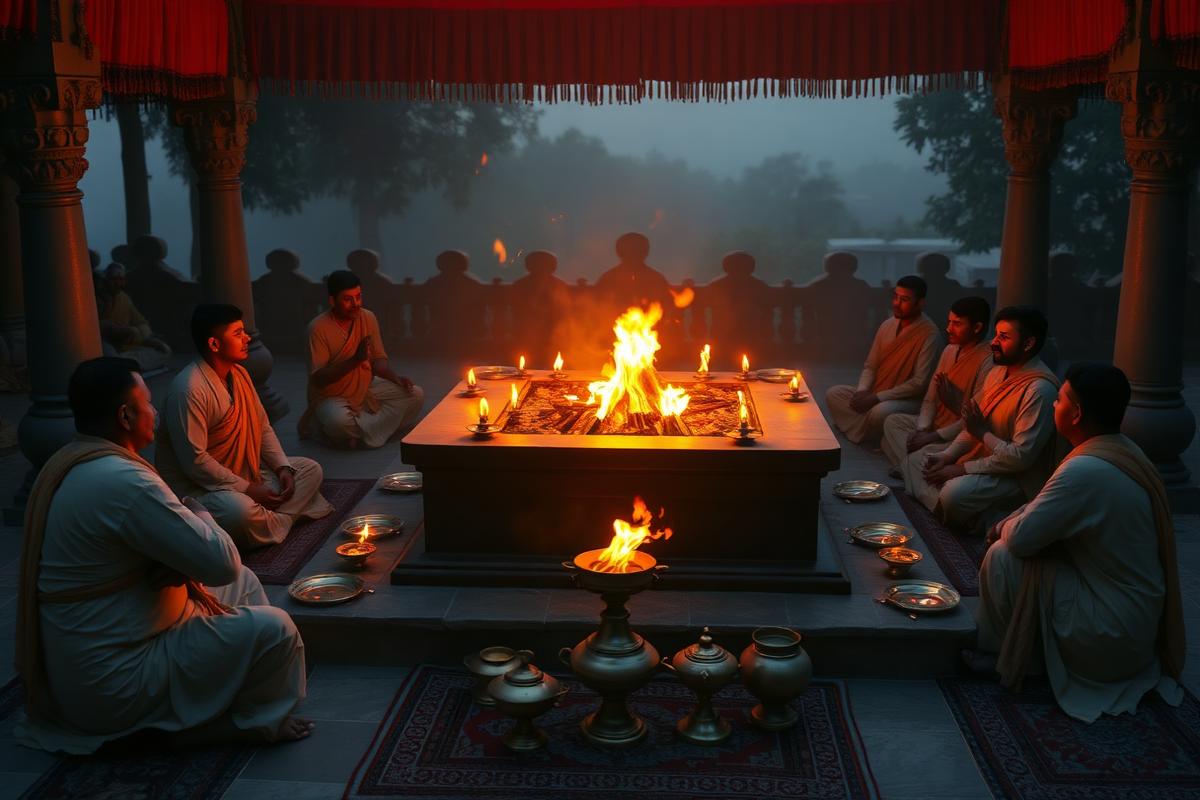
From chart to ritual
1. Your birth details
Date, time and place of birth allow the Vedic chart (kundali) to be drawn using the sidereal zodiac.
2. Reading the chart
The pandit examines the houses, the grahas, the dashas (planetary periods) and current transits.
3. Identifying the upaya
Vedic astrology does not stop at diagnosis: it proposes a remedy, the upaya, most often a puja, a homa or a recitation.
4. Ceremony performed in India
The ritual is carried out by pandits in India, in your name, with your gotra and your sankalpa.
The suggestions above reflect traditional beliefs and do not replace medical, legal or financial advice.
Tell us about your situation and, if you wish, your birth details. We reply personally before anything else.